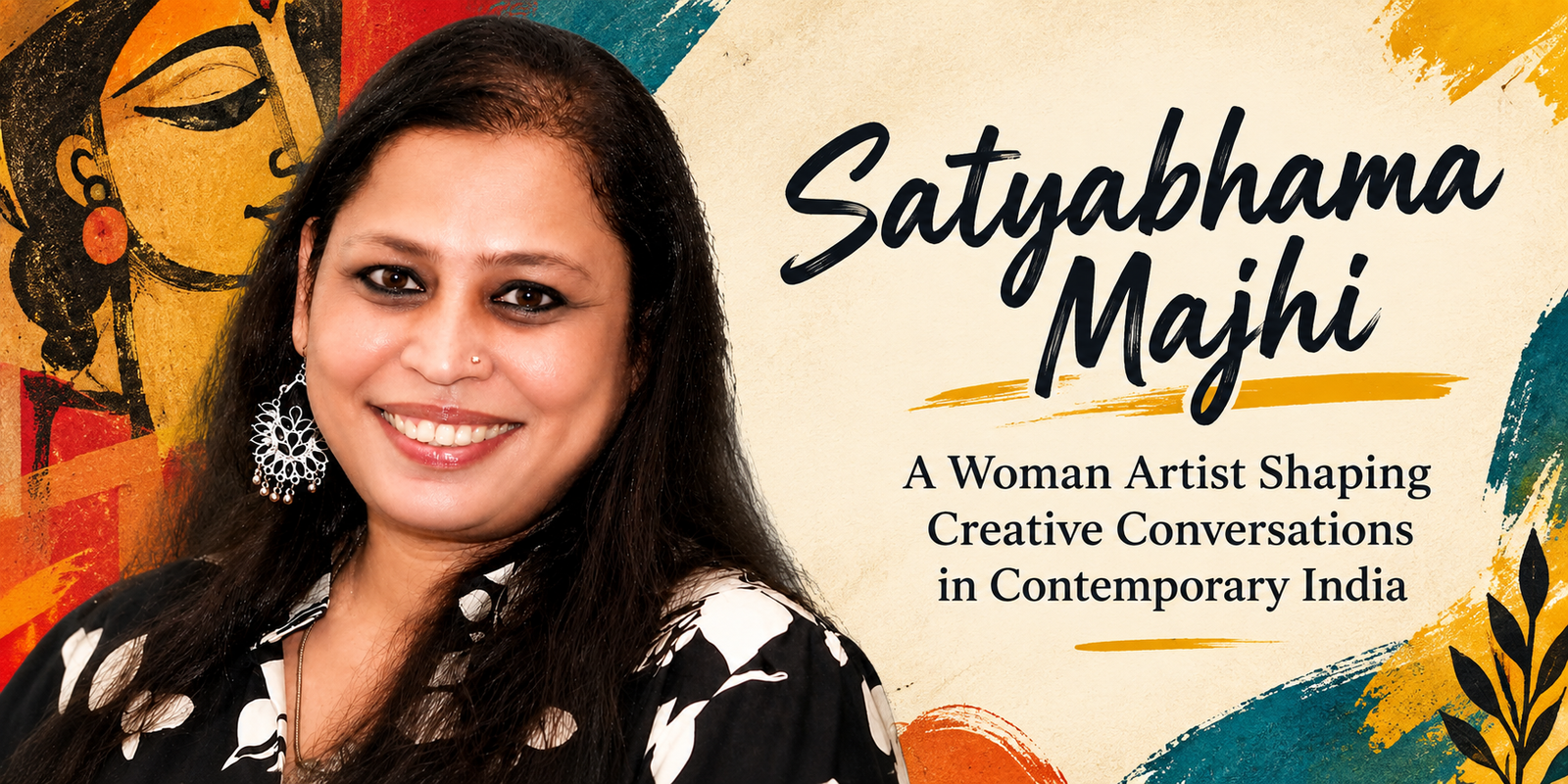
Contemporary art is not only about individual expression. It can also create spaces where different voices meet, exchange ideas, and contribute to a shared cultural narrative. For Indian contemporary artist Satyabhama Majhi, this collective dimension of art has become an important part of her wider practice.
Working as a visual artist, curator, social activist, and community art practitioner, Majhi has engaged with artists, artisans, children, rural communities, tribal communities, and educational institutions. Her work demonstrates an understanding of creativity as something that can be strengthened when people participate rather than simply observe.
The participation of women artists and artisans is particularly significant within this broader approach. It reflects the importance of recognising creative knowledge that exists not only within formal art institutions but also within communities and traditional practices.
Expanding the Idea of the Artist
The conventional image of the artist often focuses on the individual creator working independently in a studio.
Majhi’s practice presents a wider possibility.
An artist can also be a collaborator, facilitator, educator, curator, organiser, and participant in community processes.
This expanded role becomes especially meaningful when working with people whose creative contributions may not always receive the same visibility as those represented in established art institutions.
Women artists and artisans possess diverse forms of knowledge, including traditional techniques, regional visual languages, material practices, and cultural memories.
Bringing these forms of knowledge into contemporary artistic contexts can broaden the understanding of Indian art.
Women and Cultural Knowledge
Across India, women have played important roles in maintaining and transmitting creative traditions.
Patterns, textiles, decorative practices, painting traditions, craft techniques, ritual objects, and community-based forms of making have often been sustained through generations.
Such practices may be deeply connected with everyday life.
They can emerge from homes, villages, festivals, agricultural cycles, community ceremonies, and local environments.
Majhi’s interest in traditional art and community practice provides a context for recognising this knowledge as culturally significant rather than treating it as merely decorative.
The Importance of Participation
Participation changes the relationship between artist and collaborator.
Instead of one person controlling the entire creative process, a participatory project can involve multiple perspectives.
People contribute their experiences, techniques, ideas, and visual languages.
The resulting work becomes a record of collective creativity.
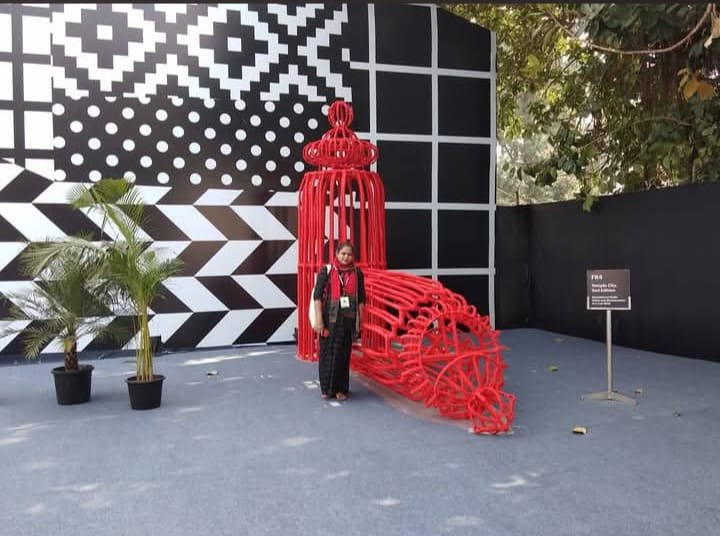
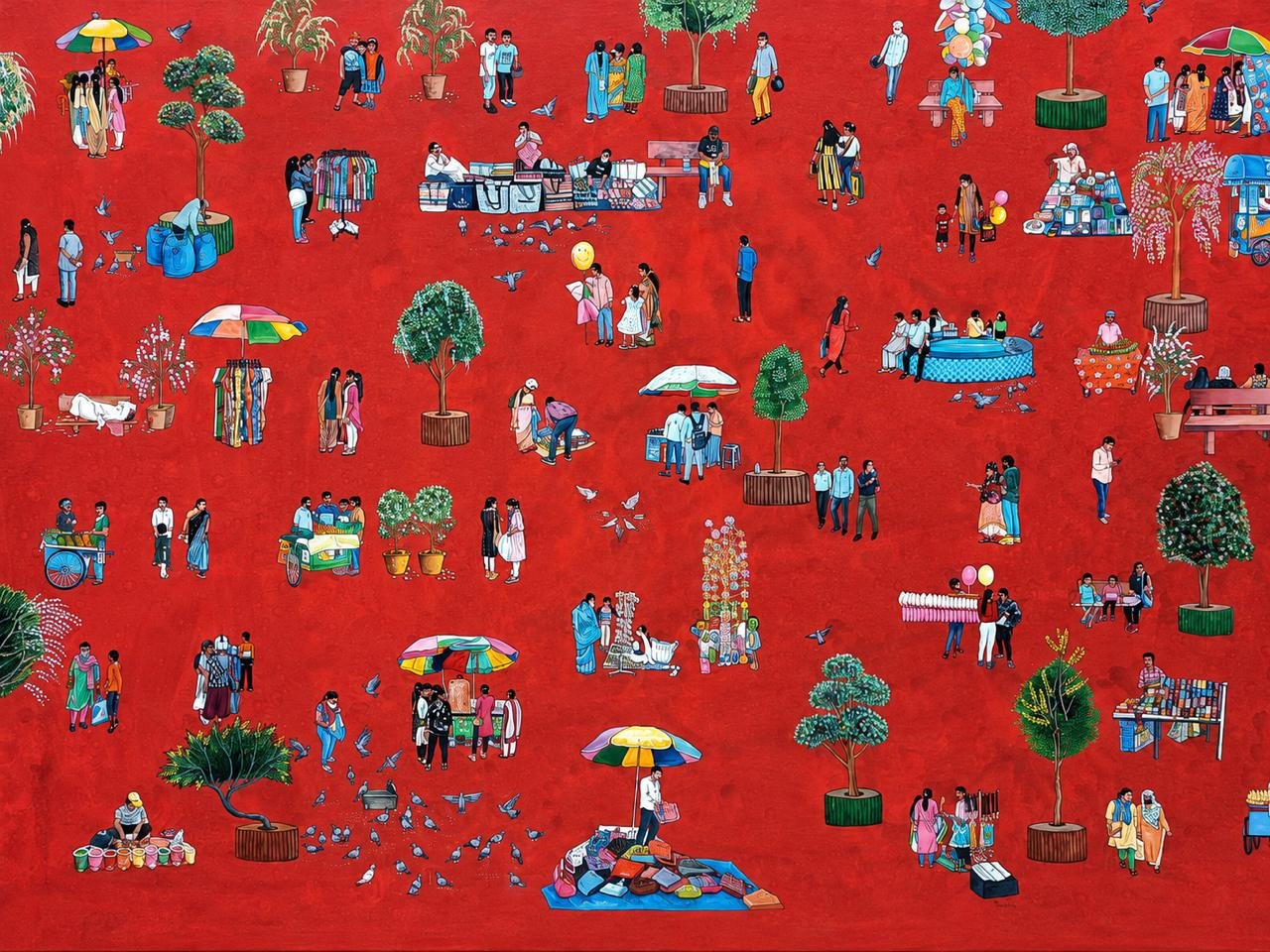
This philosophy can be seen across Majhi’s community-based activities and collaborative projects.
Her practice repeatedly creates opportunities for people to participate in artistic processes rather than remaining passive audiences.
People’s Wall – Jan, Janani and Janmabhumi
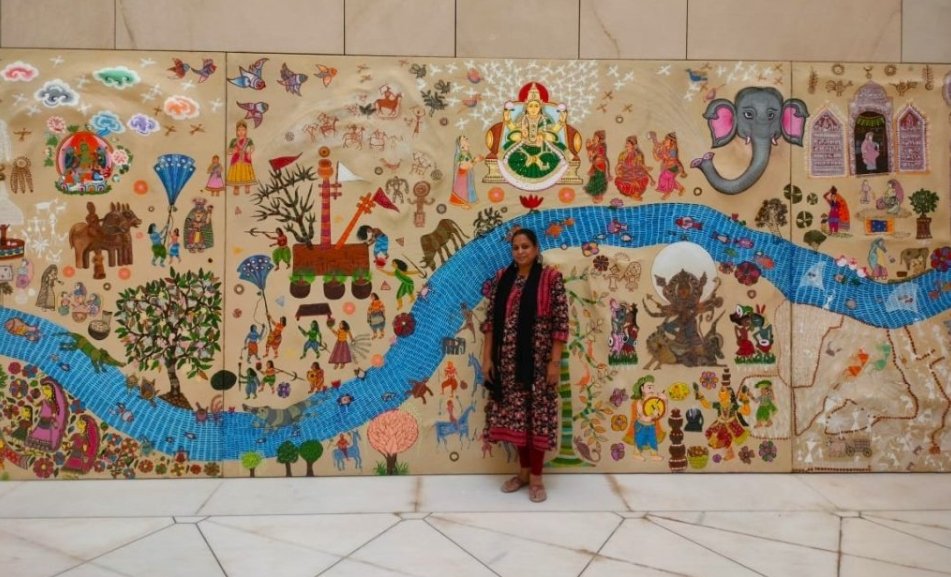
One of the strongest examples of this approach is People’s Wall – Jan, Janani and Janmabhumi, a major participatory project associated with the New Parliament House in 2023.
The project was created through the Lalit Kala Akademi, New Delhi, and brought together women artists and artisans from different regions of India.
Majhi served as a Co-Sutradhar and creative contributor.
The project’s importance extends beyond the physical artwork.
It created a platform where regional artistic traditions and women’s creative knowledge could become part of a major national cultural setting.
Regional Diversity as Strength
India’s artistic landscape is extraordinarily diverse.
Different regions have their own patterns, materials, symbols, techniques, and approaches to visual storytelling.
When women artists and artisans from different regions participate in a common project, this diversity becomes visible.
Rather than producing a single uniform artistic language, collaboration can allow multiple regional identities to exist within one larger composition.
For a contemporary artist like Majhi, this provides an opportunity to explore how individual and collective identities can coexist.
The Role of the Co-Sutradhar
Majhi’s role as Co-Sutradhar in People’s Wall – Jan, Janani and Janmabhumi is significant because the term suggests a connecting or coordinating role.
This reflects an aspect of her practice that extends beyond producing an individual artwork.
A facilitator has to bring together different contributors, understand their perspectives, and help create a common artistic direction.
The role requires sensitivity to individual artistic identities while also maintaining a shared purpose.
This connects closely with Majhi’s broader work as a curator and community art practitioner.
Women as Contributors to Contemporary Art
Women’s creative contributions have sometimes been discussed primarily through the categories of folk art, craft, or domestic creativity.
Contemporary artistic practice can challenge these divisions.
Traditional techniques and community-based knowledge can be understood as sources of serious artistic and cultural inquiry.
When such knowledge enters contemporary projects, it can acquire new contexts without losing its historical significance.
Majhi’s engagement with traditional and community practices reflects this possibility.
Beyond Representation
There is an important distinction between representing a community and creating with a community.
Representation places the artist in the position of observer.
Participation creates the possibility of shared authorship and dialogue.
Majhi’s community-oriented practice tends toward the latter approach.
Her engagement with communities involves observation and listening, but also interaction and participation.
This becomes especially meaningful when working with people whose knowledge is embedded in everyday cultural practices.
Women, Memory and Transmission
Women often occupy important positions in the transmission of cultural memory.
Knowledge about food, clothing, colour, household practices, festivals, rituals, agricultural activities, materials, and visual traditions can move from one generation to another through everyday experience.
Art can preserve aspects of this knowledge.
A visual project can bring such memories into public view.
For contemporary artists, this creates an opportunity to explore how cultural memory survives while societies undergo rapid change.
Community Art as a Platform
Majhi’s wider community practice includes engagement with villages, schools, tribal communities, urban neighbourhoods, and public spaces.
Such environments can provide platforms for creative participation.
The purpose is not necessarily to transform everyone into professional artists.
Instead, art can become a way of expressing experience, sharing knowledge, strengthening cultural connection, or encouraging dialogue.
This makes community art relevant beyond the conventional art world.
Women Artists and Public Visibility
Public visibility can influence how creative contributions are remembered.
When women’s artistic work appears in major public projects, exhibitions, or cultural platforms, it becomes part of a wider cultural record.
The visibility of women artists and artisans can also challenge narrow ideas about who produces important art.
People’s Wall – Jan, Janani and Janmabhumi is significant in this context because it connected women’s artistic participation with a nationally important public setting.
Traditional Knowledge and Contemporary Context
Majhi’s own background in traditional art education provides another connection between inherited knowledge and contemporary practice.
Her work does not simply reproduce traditional forms.
Instead, traditional references can become starting points for contemporary exploration.
Geometry, natural pigments, indigenous visual traditions, landscape, and community experience can enter new artistic contexts.
This process demonstrates that tradition and contemporary art do not necessarily exist as opposites.
They can interact.
Women, Community and the Environment
Another important dimension is the relationship between cultural knowledge and environment.
Many community-based traditions are closely connected with local materials and landscapes.
Natural pigments, plants, soil, stones, agricultural practices, and seasonal activities can all carry cultural meanings.
Majhi’s interest in natural materials and her engagement with communities demonstrate how environmental knowledge can intersect with artistic practice.
Women who participate in community traditions can therefore be important carriers of ecological and cultural knowledge.
Learning Through Collaboration
Collaboration is also a form of education.
An artist working with artisans can learn techniques and cultural perspectives that cannot be acquired solely through formal academic training.
Similarly, communities can encounter new artistic approaches through collaboration with contemporary practitioners.
This exchange creates a two-way process.
Majhi’s multidisciplinary career benefits from this openness to learning.
Her practice has evolved through interactions with artists, communities, children, institutions, and different cultural environments.
Art as a Shared Cultural Space
A collaborative artwork can function as a meeting point.
Different people may enter the process with different histories, skills, and experiences, but the artwork provides a common space in which those differences can coexist.
This idea is particularly relevant to Majhi’s work.
Whether through public art, workshops, community initiatives, or collaborative national projects, she repeatedly explores ways in which art can connect people.
The Connection With Art Education
Majhi’s work with children further demonstrates her interest in giving people opportunities for creative expression.
For many children, art provides one of the earliest ways to communicate personal experiences visually.
Encouraging observation rather than imitation allows them to recognise the value of their own perspective.
This educational approach has parallels with her community practice.
In both cases, the emphasis is on participation, observation, and individual experience.
A Broader Understanding of Cultural Leadership
Cultural leadership does not always mean directing from above.
It can also mean creating opportunities for others to contribute.
Majhi’s roles as artist, curator, educator, and community practitioner demonstrate this broader form of leadership.
Her contribution lies not only in the artworks she creates herself but also in the spaces for dialogue and participation that she helps develop.
The Continuing Relevance of Collective Creativity
In a rapidly changing society, collective creative practices can provide ways to preserve connections with cultural memory while allowing new interpretations to emerge.
Women’s participation is an important part of this process.
Their knowledge can contribute to contemporary art while also remaining connected to communities and traditions.
For artists like Majhi, the challenge is not simply to preserve the past.
It is to create conditions in which cultural knowledge can continue to evolve.
Conclusion
Satyabhama Majhi’s artistic practice offers a compelling perspective on the importance of women’s creative participation.
Through community engagement, collaborative projects, curatorial work, education, public art, and traditional-art exploration, she has consistently worked beyond the narrow boundaries of individual studio practice.
Her involvement in People’s Wall – Jan, Janani and Janmabhumi particularly demonstrates how women artists and artisans from different regions can contribute to a shared national cultural expression.
The larger significance of such projects lies in recognising that artistic knowledge exists in many places—in studios and galleries, but also in villages, homes, communities, workshops, and inherited traditions.
By creating spaces for participation and dialogue, Majhi’s practice highlights the strength of collective creativity.
Her work suggests that contemporary Indian art becomes richer when different voices are not simply represented but actively included in the process of making.
In this understanding, women’s creative participation is not a secondary aspect of cultural life. It is an essential part of the continuing story of India’s artistic and cultural expression.